

Server Auctions
Your online destination for used business and commercial servers. Browse competitively priced rack, blade, and tower server lots, bid online, and pick up fast.
Server Auctions
Your online destination for used business and commercial servers. Browse competitively priced rack, blade, and tower server lots, bid online, and pick up fast.
Server Auctions
Commercial and institutional environments cycle through server hardware on predictable refresh schedules. Rack servers, blade systems, and tower servers get pulled not because they stopped working but because lease cycles end, support contracts expire, or entire data centers get decommissioned. ATR Auctions captures that turnover from businesses, government offices, healthcare networks, universities, and enterprise environments across the nation and puts it directly in front of buyers through a structured, certified auction platform. Just high-volume lots of commercial-grade server hardware open for competitive bidding. Browse our networking equipment, storage, and server memory lots alongside current server inventory.
Server Auctions
Commercial and institutional environments cycle through server hardware on predictable refresh schedules. Rack servers, blade systems, and tower servers get pulled not because they stopped working but because lease cycles end, support contracts expire, or entire data centers get decommissioned. ATR Auctions captures that turnover from businesses, government offices, healthcare networks, universities, and enterprise environments across the nation and puts it directly in front of buyers through a structured, certified auction platform. Just high-volume lots of commercial-grade server hardware open for competitive bidding. Browse our networking equipment, storage, and server memory lots alongside current server inventory.
What Comes Through Our Server Auctions
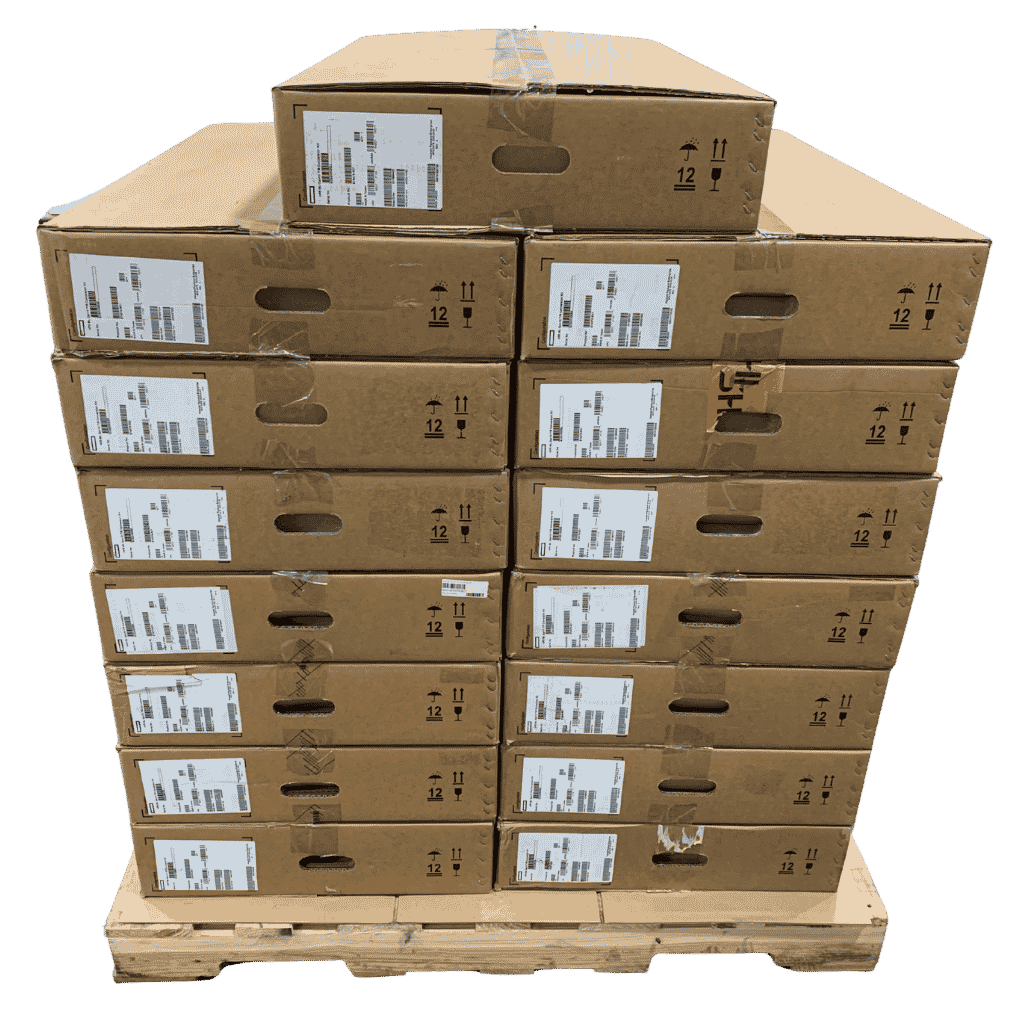
Inventory spans the full range of commercial and enterprise server hardware pulled from active data center and institutional environments. Rack server lots are the most consistent category, with 1U and 2U configurations from Dell PowerEdge, HP ProLiant, and Lenovo ThinkSystem platforms surfacing regularly from corporate and government data center refreshes. Blade server lots including chassis and blade module configurations come through from large-scale enterprise decommissions. Beyond standard rack and blade hardware, auctions regularly include tower servers, server accessories, rack server accessory lots, server parts lots, and data center equipment lots from full facility decommissions. Processor generation, RAM capacity, storage configuration, and condition are noted in listing details where available. Whether you are expanding server capacity, building out a lab environment, sourcing resale inventory, or replacing aging infrastructure at below-retail pricing, the lots reflect real hardware turnover from environments that deployed and maintained this equipment at scale.
Who Buys Servers at Auction
The buyer pool for server auctions is broad because the use cases are broad. Resellers and IT asset brokers source bulk server lots for remarketing across wholesale and resale channels. Managed service providers and IT service companies source rack servers to expand client infrastructure without new equipment pricing. Small and mid-sized businesses bid on tower and rack servers to build out internal infrastructure at a fraction of retail cost. Home lab enthusiasts and developers source data center hardware for virtualization, self-hosted services, and learning environments. Schools, nonprofits, and community organizations use auctions to source capable server hardware at below-retail pricing. And individual IT professionals bid on server parts lots and accessory lots to maintain existing platforms without committing to new equipment pricing. The auction format puts all of them on equal footing, bidding against the same lots with the same access to lot information.
What types of servers are available at auction?
Lots regularly include 1U and 2U rack servers, blade servers and chassis, tower servers, GPU compute servers, server accessory lots, and bulk data center decommission lots sourced from corporate, healthcare, government, and institutional environment disposals across a range of platforms from Dell, HP, and Lenovo.
What should I check before bidding on a server lot?
Processor generation, RAM type and capacity, storage configuration, and drive bay count are the core specs to verify against your workload requirements. Confirm whether the server uses SAS or SATA drives and whether NVMe is supported if storage performance matters to your use case. For rack servers verify the rail kit situation as rails are often not included in surplus lots. Power supply redundancy and wattage requirements are also worth checking before bidding on larger rack units.
Do the servers come with drives and memory installed?
Drive and memory configuration varies by lot and is noted in listing details where available. Some lots are pulled with drives and RAM intact. Others are stripped before decommission, particularly from environments with strict data sanitization requirements. Do not assume drives or memory are included unless explicitly stated. Listings will note whether the server ships with HDDs, SSDs, or RAM installed.
What is the difference between SAS and SATA drives in a server context?
SAS (Serial Attached SCSI) drives are designed for enterprise server environments offering higher reliability ratings, dual-port connectivity, and consistent performance under sustained workloads. SATA drives are more common in consumer and light business use and offer higher capacity at lower cost but with lower sustained workload ratings. Most enterprise rack servers use SAS backplanes. Verify which interface your server supports before sourcing drives separately. Browse current storage lots for compatible drives.
Are servers suitable for virtualization available at auction?
Yes. Rack servers from Dell, HP, and Lenovo with high core counts, large memory capacity, and redundant power supplies are well suited for VMware ESXi, Microsoft Hyper-V, and Proxmox deployments and surface regularly through data center decommissions. Review the processor generation, maximum memory capacity, and NIC configuration against your virtualization platform requirements before bidding.
What rail kits and accessories come with rack servers?
Rail kits, bezels, and cable management arms vary by lot and are noted in listing details. Corporate data center pulls frequently do not include rails as they are often left in the rack or disposed of separately. Factor in the cost of compatible rails if rack mounting is required. Server accessory lots including rails, bezels, and riser cards surface separately through ATR and can be sourced alongside server lots.
What does iDRAC, iLO, or IMM mean and why does it matter?
iDRAC (Dell), iLO (HP), and IMM (Lenovo) are out-of-band management interfaces built into enterprise servers that allow remote access, monitoring, and management independent of the operating system. These interfaces are standard on enterprise rack servers and are useful for remote administration, BIOS configuration, and hardware diagnostics. Licensing tiers vary, some advanced features require an active license. Verify management interface availability and licensing status in the listing details where noted.
Server Auctions
Server Auctions - Start Bidding view current auctions and register.