Hard Drive & SSD Auctions

Your online destination for HDDs, SSDs, and NVMe drives. Browse competitively priced storage lots, bid online, and get your drives shipped or picked up fast.

Hard Drive & SSD Auctions

Your online destination for HDDs, SSDs, and NVMe drives. Browse competitively priced storage lots, bid online, and get your drives shipped or picked up fast.

Hard Drives & SSDs Sourced, Tested, Auctioned

Commercial and institutional IT environments cycle through storage hardware on predictable refresh schedules. HDDs, SSDs, and NVMe drives get pulled not because they stopped working but because lease cycles end, capacity requirements grow, or entire server and workstation fleets get decommissioned. ATR Auctions captures that turnover from businesses, government offices, healthcare networks, universities, and enterprise environments across the nation and puts it directly in front of buyers through a structured, certified auction platform. Just high-volume lots of commercial-grade storage media open for competitive bidding.
Hard Drives & SSDs Sourced, Tested, Auctioned

Commercial and institutional IT environments cycle through storage hardware on predictable refresh schedules. HDDs, SSDs, and NVMe drives get pulled not because they stopped working but because lease cycles end, support contracts expire, or capacity requirements outgrow the hardware. ATR Auctions captures that turnover from businesses, government offices, healthcare networks, universities, and enterprise environments across the nation and puts it directly in front of buyers through a structured, certified auction platform. Just high-volume lots of commercial-grade storage media open for competitive bidding.

What Comes Through Our Storage Auctions

Inventory spans the full range of commercial and enterprise storage media. On the hard drive side that means 3.5-inch desktop and server HDDs, 2.5-inch laptop and SFF drives, and high-capacity NAS and RAID drives pulled from active storage environments. SSD inventory includes 2.5-inch SATA SSDs, M.2 NVMe drives, and enterprise U.2 and PCIe SSDs from server and workstation refreshes. Capacity ranges run from everyday desktop sizes up to high-capacity enterprise drives in the 8TB, 12TB, and 16TB range. Beyond individual drives, auctions regularly include drive lots pulled from servers, NAS enclosures, and storage arrays, as well as mixed media lots from office and data center cleanouts. Whether you are expanding a home lab, building out a NAS, stocking a repair shop, upgrading a workstation, or sourcing resale inventory, the lots reflect real hardware turnover from environments that deployed and maintained this storage at scale.

Storage Auctions

Storage refers to any hardware used to retain data permanently or semi-permanently, as opposed to RAM which holds data only while a system is running. Storage comes in several forms spanning mechanical, solid state, and hybrid technologies, each with different speed, capacity, durability, and cost profiles. ATR Auctions sources HDDs, SSDs, and NVMe drives from corporate workstation refreshes, server decommissions, and enterprise hardware disposals across the nation. Inventory includes individual drives, bulk lots, and pulled arrays spanning desktop, laptop, and server form factors across a wide range of capacities and generations.

HDD Auctions

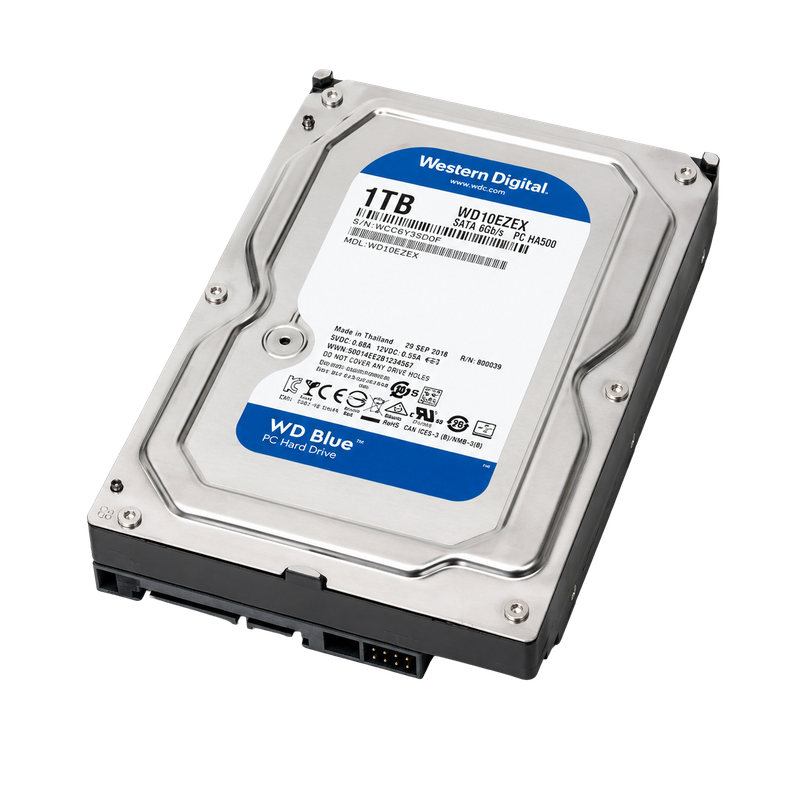
Hard disk drives use spinning magnetic platters to store data and remain the most cost-effective option for high-capacity storage. Introduced commercially in 1956 by IBM, HDDs have been the dominant storage medium for decades and are still widely deployed in NAS systems, surveillance storage, backup environments, and anywhere large capacity matters more than raw speed. Available in 3.5-inch desktop and server form factors and 2.5-inch laptop and small form factor configurations. Common capacities in surplus channels range from 500GB up to 16TB and beyond. Heavily used in healthcare records storage, media production, surveillance, and bulk data archiving.

SSD Auctions

Solid state drives use NAND flash memory with no moving parts, offering dramatically faster read and write speeds than traditional hard drives along with lower power consumption and greater shock resistance. SSDs became mainstream in laptops and desktops through the early 2010s and are now standard in most new systems. Available in 2.5-inch SATA form factors compatible with any system that takes a standard hard drive, and in M.2 form factors for newer platforms. Common in corporate laptop refreshes, workstation upgrades, and enterprise desktop decommissions. Capacities in surplus channels commonly range from 120GB up to 4TB.

NVMe SSD Auctions

NVMe (Non-Volatile Memory Express) is a protocol designed specifically for solid state storage, offering significantly higher speeds than SATA-based SSDs by communicating directly over the PCIe bus. NVMe drives are available in M.2 form factors for consumer and workstation platforms and U.2 and PCIe add-in card formats for enterprise servers. Introduced around 2013 and now standard in current-generation laptops, desktops, and servers. Used heavily in video production, data analytics, financial trading platforms, and any workload where storage latency matters. A growing category in enterprise surplus as older NVMe platforms refresh.

Enterprise SSD Auctions

Enterprise SSDs are built for sustained workloads that consumer drives are not rated for, featuring higher endurance ratings, power loss protection, and consistent latency under load. Available in U.2, PCIe AIC, and M.2 form factors. Common in rack servers, all-flash storage arrays, and hyperconverged infrastructure platforms from Dell, HP, Lenovo, and Supermicro. Pulled from data center decommissions and server refresh cycles. A high-value category for buyers running demanding server and virtualization workloads.

U.2 SSD Auctions

U.2 is an enterprise drive form factor using a 2.5-inch housing with a high-speed NVMe interface, common in rack servers and enterprise storage platforms. Offers the speed of NVMe with the hot-swap capability and physical durability of a traditional drive bay. Frequently pulled from Dell PowerEdge, HP ProLiant, and Supermicro server decommissions. Popular with buyers building or expanding enterprise storage on a budget.

SATA SSD Auctions

SATA SSDs use the same interface as traditional hard drives, making them a straightforward drop-in upgrade for any system with a standard drive bay. While slower than NVMe, SATA SSDs are still significantly faster than HDDs and remain the most common SSD type in corporate laptop and desktop fleets. Available in 2.5-inch and mSATA form factors. A high-volume category in enterprise surplus channels given the sheer number of corporate systems refreshed annually.

M.2 SSD Auctions

M.2 is a compact form factor used for both SATA and NVMe SSDs, common in laptops, ultrabooks, and modern desktops. Available in several lengths including 2242, 2260, and 2280, with 2280 being the most common. Pulled from corporate laptop refreshes, workstation upgrades, and consumer system disposals. Important to verify whether a specific M.2 slot supports SATA, NVMe, or both before purchasing. A high-volume category in laptop and compact desktop surplus.

NAS Hard Drive Auctions

NAS-rated hard drives are designed for always-on operation in network attached storage enclosures, featuring vibration compensation, higher workload ratings, and firmware tuned for multi-drive RAID environments. Common brands include Western Digital Red, Seagate IronWolf, and Toshiba N300. Pulled from NAS decommissions, media server refreshes, and small business storage cleanouts. Popular with home lab builders, small business IT, and media storage enthusiasts sourcing high-capacity drives at auction prices.

Server Hard Drive Auctions

Enterprise-grade 3.5-inch and 2.5-inch SAS and SATA hard drives pulled from rack servers, blade systems, and storage arrays. SAS (Serial Attached SCSI) drives offer higher rotational speeds, dual-port connectivity, and greater reliability ratings than consumer SATA drives. Common in Dell PowerEdge, HP ProLiant, and IBM server decommissions. Available in standard capacities as well as high-RPM 10K and 15K models used in performance-sensitive server environments.

Laptop Hard Drive & SSD Auctions

2.5-inch HDDs and SATA SSDs pulled from commercial laptop refreshes, corporate notebook decommissions, and portable workstation disposals. Common capacities range from 256GB to 2TB. A high-volume surplus category given the scale of corporate laptop fleet refreshes. Popular with repair shops, refurbishers, and anyone upgrading or replacing storage in portable systems.

Bulk & Mixed Drive Lots

Assorted hard drive and SSD lots from office cleanouts, server room decommissions, and institutional IT disposals. May include a mix of HDDs, SSDs, and NVMe drives across desktop, laptop, and server form factors. Capacities, speeds, and conditions vary by lot. Popular with resellers, repair technicians, and bulk buyers comfortable sorting and testing mixed inventory. Priced to reflect the unsorted nature of the lot.

Who Buys Hard Drives & SSDs at Auction

The buyer pool for storage auctions is broad because the use cases are broad. Regional resellers and IT asset brokers source high-volume drive lots for remarketing across retail and wholesale channels. Small and mid-sized businesses pick up commercial-grade HDDs and SSDs at a fraction of retail to expand server capacity, build out NAS systems, or refresh workstation storage. Schools, nonprofits, and community organizations use auctions to stretch tight technology budgets further than any retail or refurbished channel allows. Repair shops and independent technicians bid on mixed lots to keep common replacement drives on the shelf. System integrators and managed service providers source spare drives and replacement units without committing to distributor pricing. And individual builders and enthusiasts bid on high-capacity HDDs and fast NVMe SSDs to upgrade personal systems and home lab storage. The auction format puts all of them on equal footing, bidding against the same lots with the same access to lot information.

What types of storage drives are available at auction?

Lots regularly include 3.5-inch desktop and server HDDs, 2.5-inch laptop drives, SATA SSDs, M.2 NVMe drives, U.2 enterprise SSDs, SAS hard drives, NAS-rated drives, and bulk mixed lots sourced from corporate workstation refreshes, server decommissions, and enterprise hardware disposals.

Is buying used hard drives and SSDs safe?

It depends on the intended use. Drives pulled from enterprise environments are typically lightly used and well maintained, often running in temperature-controlled conditions. SSDs have no moving parts and generally age well under normal workloads. HDDs carry more risk over time due to mechanical wear, so reviewing any condition notes and health data included in the listing is important. For critical data storage, used drives are best paired with a RAID configuration or regular backup routine regardless of source.

What is the difference between SAS and SATA drives?

SATA is the standard interface used in consumer and light business storage, common in desktop HDDs, laptop drives, and SATA SSDs. SAS (Serial Attached SCSI) is an enterprise interface offering higher rotational speeds, dual-port connectivity, and greater reliability ratings designed for server and storage array environments. SAS drives require a SAS controller or compatible server backplane and are not directly interchangeable with SATA in most consumer systems. SAS lots at auction typically come from server and storage array decommissions.

Current Networking Auctions

No products were found matching your selection.

Storage Auctions - Start Bidding view current auctions and register.